Scientists
Discover the groundbreaking contributions of Muslim scientists whose innovations and discoveries laid the foundations for advancements in mathematics, astronomy, medicine, and more.
Home > Scientists
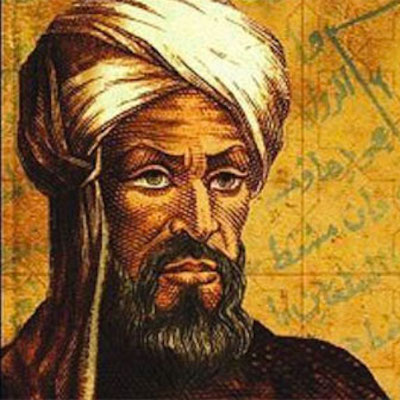
Al-Khwarizmi
Al-Khwarizmi, known as the "father of algebra," was a pioneering Muslim mathematician, astronomer, and geographer from the 9th century. His groundbreaking work on algebra and algorithms laid the foundation for modern mathematics. Al-Khwarizmi’s contributions continue to influence fields such as engineering, computer science, and finance.
Discover more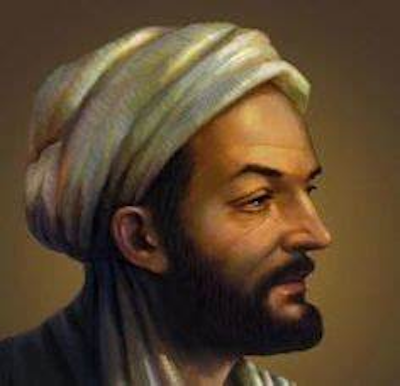
Ibn Sina
Ibn Sina, also known as "The Father of Medicine," is one of the greatest scholars and philosophers of Islam. Born in Bukhara (in present-day Uzbekistan), he demonstrated early intelligence, which enabled him to study various sciences from a young age, including jurisprudence, language, literature, philosophy, and medicine.
Discover more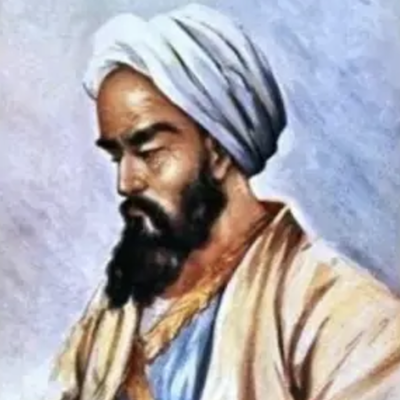
Al-Razi
Al-Razi (865-925 CE) was a renowned Muslim physician and scientist, considered one of the pioneers of medicine. He is best known for his comprehensive medical encyclopedia Al-Hawi and his contributions to chemistry and pharmacology. Al-Razi emphasized observation and experimentation, laying the foundation for modern scientific methods.
Discover more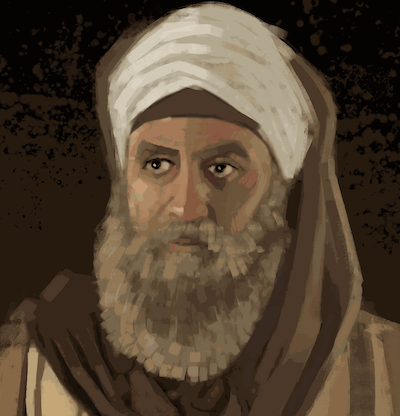
Ibn al-Haytham
Ibn al-Haytham (965–1040) was a pioneering Arab scientist, often referred to as the "father of optics." His groundbreaking work in optics, particularly his Book of Optics, laid the foundations for modern understanding of light, vision, and the scientific method. He made significant contributions to physics, mathematics, and astronomy, and his experiments inspired future generations of scientists in both the Islamic world and Europe.
Discover more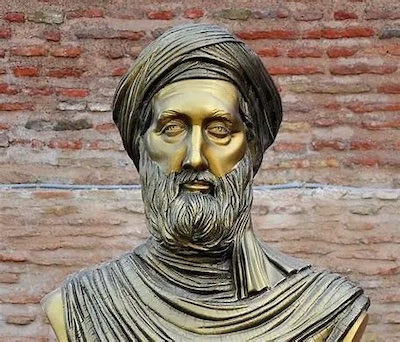
Ibn Khaldun
Ibn Khaldun was a polymath known for his work as a historian, sociologist, philosopher, and political theorist. He is most famous for his pioneering work Al-Muqaddimah (The Introduction), a comprehensive analysis of history, society, economics, and politics
Discover more